
Ensuring the 7*24-hour normal operation of the power grid under complex terrain conditions and variable climates is an enormous challenge.
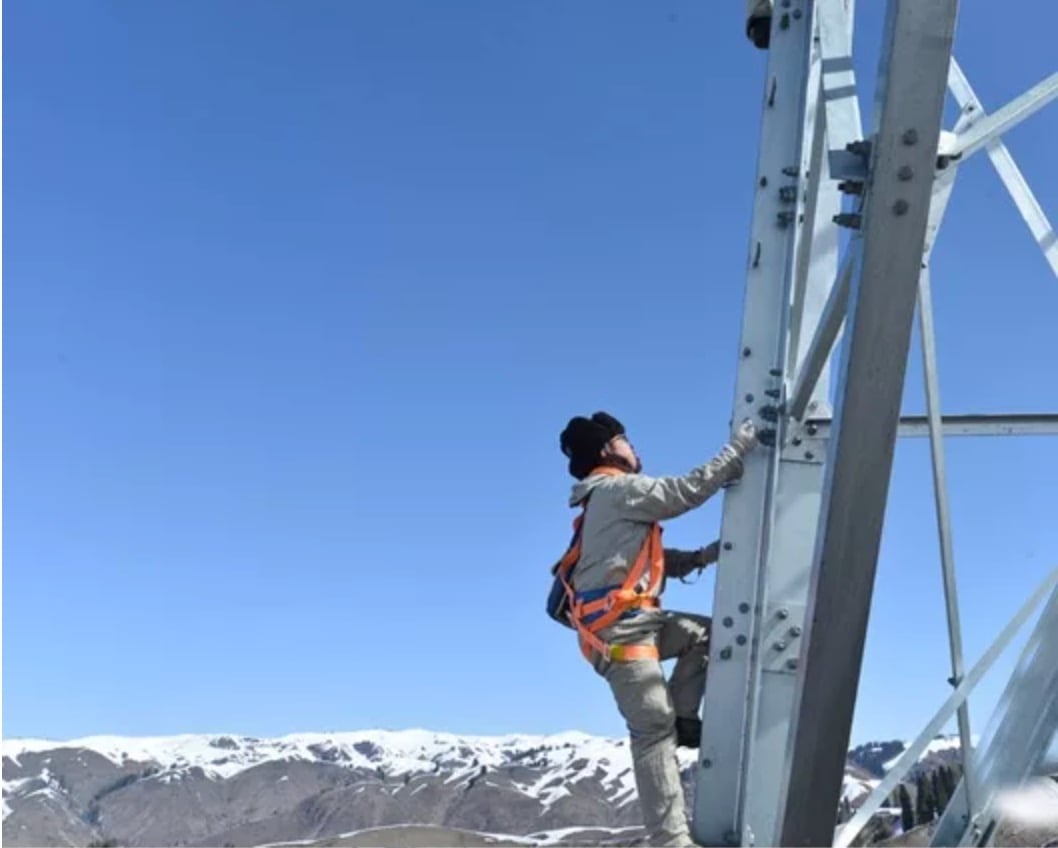
Currently, the main mode of power grid inspection is still manual inspection, which has high labor costs and a high risk factor for inspectors. Every day, they carry professional equipment into high mountains and valleys, even deep forests, climb tens of meters high iron towers to carry out power grid inspection work. In severe weather, they still have to persist in the front line of inspection. During the maintenance process, once accidents such as falls from heights or electric shocks occur, the consequences are unimaginable.
In recent years, with the application and promotion of drone technology, drone inspection has become one of the intelligent evolution directions in the inspection business of the power industry, mainly including manually controlled drone inspection and RTK drone autonomous flight inspection. Traditional manual work can complete at most about 10 tower inspections a day, while a drone can complete 1 tower inspection in 20 minutes, with an efficiency 6-10 times that of manual work. However, both face the following application bottlenecks.
First, the cost is high. If manual drone inspection is adopted, the pilots need 3 to 12 months of training before they can take up their posts, resulting in high learning costs. For RTK drone inspection, it is necessary to set up a temporary base station every 2 to 3 kilometers before operation. Moreover, since the position of each setup cannot be guaranteed to be exactly the same, the data obtained based on temporary base stations cannot be reused, and the base stations need to be rebuilt before each inspection, leading to high usage costs.
Second, there are hidden dangers to information security. For example, in the process of collecting 3D geographic information of the power grid based on temporary base stations, a large amount of offline data will be generated, which is prone to data loss during transmission and calculation.
So, how to overcome the various difficulties in the current power grid inspection mode, especially the high cost and high risk faced by traditional drone inspections?
SpatiX Cors Center enables the "autopilot" mode for drones
SpatiX Cors Center specially provides a dynamic centimeter-level positioning solution for customers in the power industry, endowing drones with precise flight capabilities, realizing standardized autonomous operations of drone power inspections nationwide, and greatly improving inspection efficiency.
The core technical principles of this solution lie in the following two points: First, based on more than 2,200 self-built ground-based augmentation station networks across the country (hereinafter referred to as the "national unified network"), Qianxun Position provides FindCM centimeter-level positioning services. By integrating this service into the inspection drone, it can ensure that the drone achieves centimeter-level positioning in most areas of the country and completes autonomous flight inspection operations according to the set route. In other words, inspectors only need to set the route, without going through long-term drone operation training or building their own base stations, which greatly reduces learning costs and usage costs.
In addition, Qianxun Yunji FindTrace high-precision (GNSS+INS) post-processing service provided by Qianxun Position can be used to collect 3D geographic information of the power grid. This service is also based on the "national unified network" and has a unified reference datum. When collecting power grid information, the drone only needs to take aerial photos once, and the obtained data is transmitted to the cloud via a dedicated line and automatically calculated by FindTrace to generate high-precision power grid data, which provides a basis for route planning. Not only is data security guaranteed, but it can also be reused during the next inspection without the need for repeated collection.
A relevant person in charge of Qianxun Position emphasized: "Qianxun's solution makes the seemingly complex work of drone power grid inspection simpler, equivalent to enabling the 'autopilot' mode for drones. Compared with traditional RTK drone inspection, it is more intelligent, easier to use, and has no risk of data security leakage."
Adopting the "drone power inspection solution" can greatly improve the efficiency of power grid management and ensure the safety of electricity use for the whole society.
Case: Applied in China Southern Power Grid, making inspections more intelligent and safer
At present, the "drone power inspection solution" has been successfully applied in China Southern Power Grid. Based on this solution, Qianxun Position has provided China Southern Power Grid with a Beidou high-precision real-time positioning and post-processing calculation proprietary service system, including basic services for high-precision geographic information data collection, full autonomous drone line patrol, 3D path navigation planning and other businesses, which has improved the intelligence level of power inspection in China Southern Power Grid and ensured the safety of the entire power grid system.