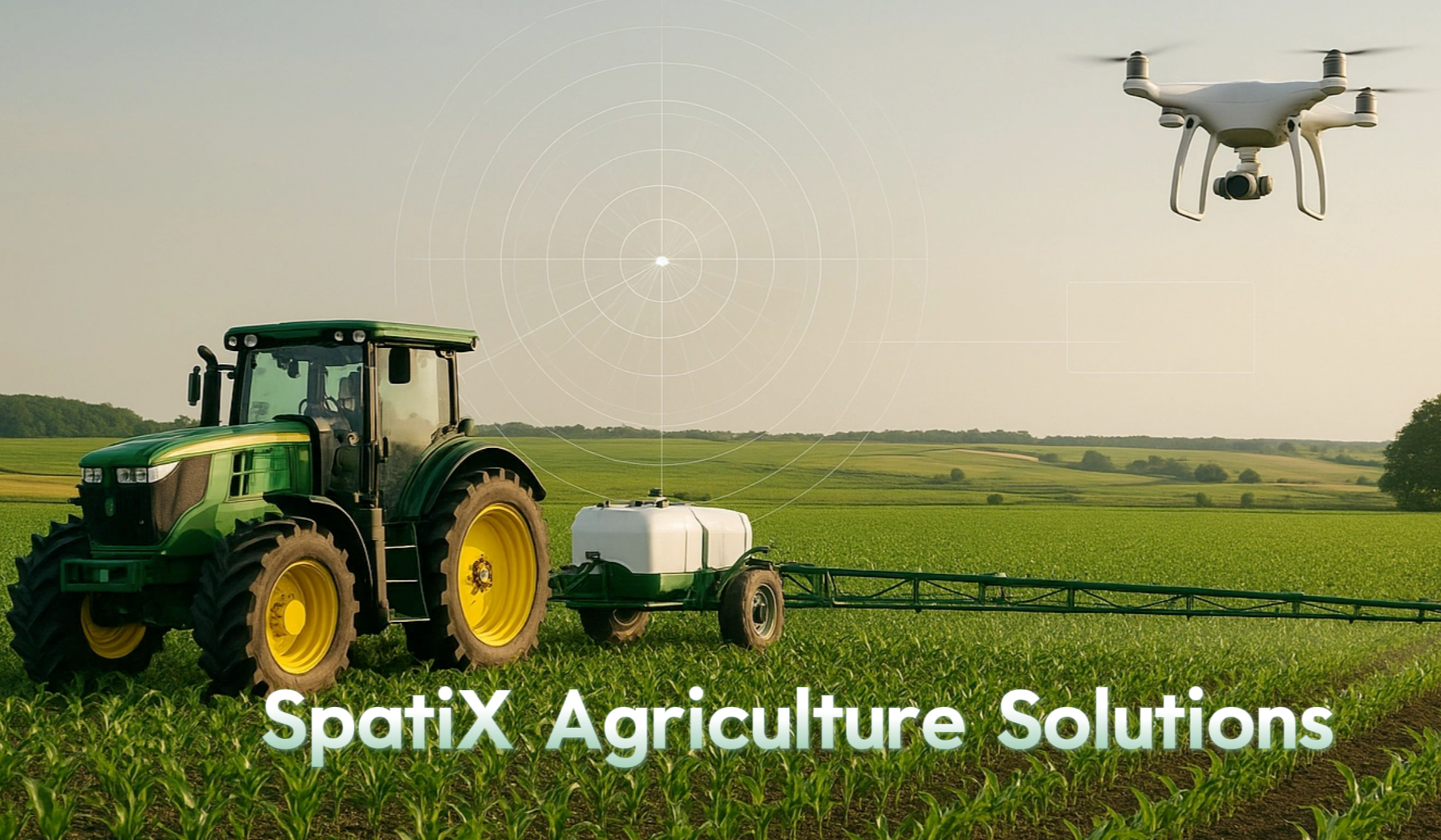


The Role of Precision GNSS in Modern Agriculture
Modern agriculture faces numerous challenges, from optimizing resource usage to enhancing crop yields while ensuring environmental sustainability. Precision GNSS (Global Navigation Satellite System) technologies have emerged as a game-changer, addressing these challenges head-on. Spatix, with its advanced GNSS solutions, is at the forefront of this transformation, providing centimeter-level positioning accuracy and spatiotemporal intelligence that revolutionize farming practices.
Precision GNSS technologies, like Spatix's XStar fusion positioning, enable farmers to achieve unparalleled accuracy in field operations. This level of precision allows for efficient resource allocation, minimizing wastage and maximizing productivity. From planting and fertilizing to harvesting, every step can be optimized, resulting in higher yields and reduced operational costs.
Key Benefits of Centimeter-Level Accuracy
Achieving centimeter-level accuracy in positioning is a critical factor in modern agriculture. Traditional GPS systems, with their meter-level accuracy, fall short in meeting the precision demands of today's farming practices. Spatix's GNSS solutions provide the high-precision positioning needed to drive efficiency and effectiveness in the field.
One of the primary benefits of this accuracy is the ability to perform precise planting. With centimeter-level positioning, farmers can ensure that seeds are planted at optimal intervals, enhancing plant growth and crop yield. Additionally, precision in planting reduces the need for thinning and replanting, saving both time and resources.
Another significant advantage is the precision in applying fertilizers and pesticides. Accurate positioning ensures that these inputs are applied only where needed, reducing chemical usage and minimizing environmental impact. This targeted approach not only promotes sustainable farming but also cuts down on costs associated with over-application.
Enhancing Field Efficiency with Real-Time 3D Modeling
Real-time 3D modeling is a revolutionary aspect of Spatix's GNSS technology, offering farmers a comprehensive view of their fields. This capability allows for the creation of detailed, real-time maps that can be used for various applications, from monitoring crop health to planning irrigation systems.
With real-time 3D modeling, farmers can quickly identify problem areas in their fields, such as zones with poor drainage or pest infestations. This immediate feedback enables prompt intervention, preventing minor issues from escalating into significant problems. The ability to visualize the field in three dimensions also aids in effective planning and resource management, ensuring that every part of the field receives appropriate attention.
Moreover, real-time 3D modeling facilitates better decision-making. By having access to accurate, up-to-date information, farmers can make informed choices about crop management, optimizing yield and reducing waste. This technology is particularly beneficial in large-scale farming operations, where manual monitoring is impractical.
Operating in GPS-Denied and Low-Light Environments
One of the standout features of Spatix's GNSS solutions is their ability to operate effectively in GPS-denied and low-light environments. Traditional GNSS systems often struggle in such conditions, leading to inaccuracies and operational inefficiencies. However, Spatix.ai's advanced technologies ensure reliable performance regardless of environmental challenges.
In GPS-denied environments, such as areas with dense tree cover or urban canyons, Spatix's solutions utilize multi-sensor fusion and proprietary algorithms to maintain accuracy. This capability is crucial for farmers who operate in diverse landscapes, ensuring that their positioning needs are met consistently.
Low-light conditions, such as early morning or late evening, pose another challenge for traditional GNSS systems. Spatix's technology is designed to perform seamlessly in these conditions, allowing farmers to extend their working hours and enhance productivity. The ability to operate effectively in varying light conditions ensures that farming activities can be carried out without interruption, maximizing efficiency.
Case Studies: Success Stories in Precision Agriculture
The impact of Spatix's GNSS solutions on modern agriculture is best illustrated through real-world success stories. One notable example is a large-scale farming operation that integrated Spatix's XStar fusion positioning and intelligent terminals into their workflow. The result was a significant increase in crop yield and a notable reduction in resource usage.
In another case, a precision agriculture company utilized Spatix's real-time 3D modeling to optimize their irrigation system. By identifying areas with poor water distribution, they were able to make necessary adjustments, resulting in improved crop health and reduced water wastage.
These success stories highlight the transformative power of Spatix's GNSS technologies. By providing high-precision positioning and advanced spatiotemporal intelligence, Spatix enables farmers to overcome traditional challenges and achieve new levels of efficiency and productivity.
Future Trends and Innovations in Agricultural GNSS Technology
The future of precision agriculture is poised for exciting advancements, with GNSS technology playing a pivotal role. As the demand for sustainable farming practices grows, the need for high-precision positioning and real-time data will become even more critical. Spatix is committed to driving innovation in this field, continuously enhancing their GNSS solutions to meet evolving agricultural needs.
One of the future trends is the integration of GNSS technology with autonomous farming equipment. By combining high-precision positioning with autonomous capabilities, farmers can further optimize field operations, reducing labor costs and increasing efficiency. Spatix's technology is well-suited for such applications, providing the accuracy and reliability needed for autonomous systems.
Another innovation on the horizon is the use of GNSS technology in conjunction with AI and machine learning. By analyzing large datasets, AI can provide predictive insights, helping farmers make proactive decisions about crop management. Spatix's cloud-native spatial intelligence platform is designed to support such advanced applications, offering high throughput and real-time analytics.
In conclusion, Spatix's high-precision GNSS technologies are revolutionizing modern agriculture. From achieving centimeter-level accuracy to enhancing field efficiency with real-time 3D modeling, Spatix provides the tools farmers need to thrive in a competitive landscape. As the agriculture industry continues to evolve, Spatix remains at the forefront, driving innovation and empowering farmers to achieve new heights of productivity and sustainability.