
Understanding the Ionosphere and Its Role in Navigation
The ionosphere is a crucial layer of the Earth's atmosphere, located between 60 and 1000 kilometers above the surface. This region is filled with charged particles, or plasma, created by the ionizing effect of solar ultraviolet radiation. These charged particles play a vital role in the transmission of radio waves, making the ionosphere essential for various communication and navigation systems.
.jpg?width=2400&height=1200&name=pexels-pixabay-41949%20(1).jpg)
Satellite navigation systems, including GPS, GLONASS, Galileo, and BeiDou, rely on the stable transmission of signals through the ionosphere. When these signals pass through this layer, they can experience refraction, diffraction, and scattering due to the charged particles, leading to errors known as ionospheric delays. These delays can significantly impact the accuracy of high-precision applications such as autonomous driving, drone operations, and mobile phone lane-level navigation.
The Effects of Solar Activity on the Ionosphere
Solar activity, particularly during the peak of the sunspot cycle, has a profound impact on the ionosphere. Sunspots follow an 11.2-year cycle, with the next peak anticipated around 2025. During this period, the ionosphere experiences heightened turbulence due to increased solar radiation. This turbulence, known as ionospheric scintillation, leads to rapid fluctuations in the density of charged particles, disrupting satellite signal propagation.
Geomagnetic storms and auroras, triggered by strong solar events, further complicate the ionospheric environment. These phenomena cause the ionosphere to expand and contract, altering its size, shape, and electron density. Such changes introduce variability in ionospheric delays, making it challenging to maintain the accuracy of satellite navigation systems. Documented cases have shown that ionospheric effects can cause drone flight deviations of over 10 meters, highlighting the practical implications of these disturbances.
Challenges Faced by Satellite Navigation Systems
The irregularities in the ionosphere pose significant challenges for satellite navigation systems. Ionospheric delays can lead to positioning errors, which are particularly detrimental for applications requiring high precision. For instance, autonomous vehicles need positioning accuracy within 20 to 30 centimeters to operate safely. However, ionospheric disturbances can easily exceed this margin, jeopardizing the functionality and safety of autonomous systems.
Ionospheric scintillation is more prevalent in low-latitude regions near the equator, where the concentration of charged particles fluctuates more dramatically. This geographical variability adds another layer of complexity to maintaining consistent navigation performance across different regions. The need for real-time correction of ionospheric errors is thus imperative for the reliability of satellite-based services.
Innovative Solutions by SpatiX: Atmospheric Inference Large Model
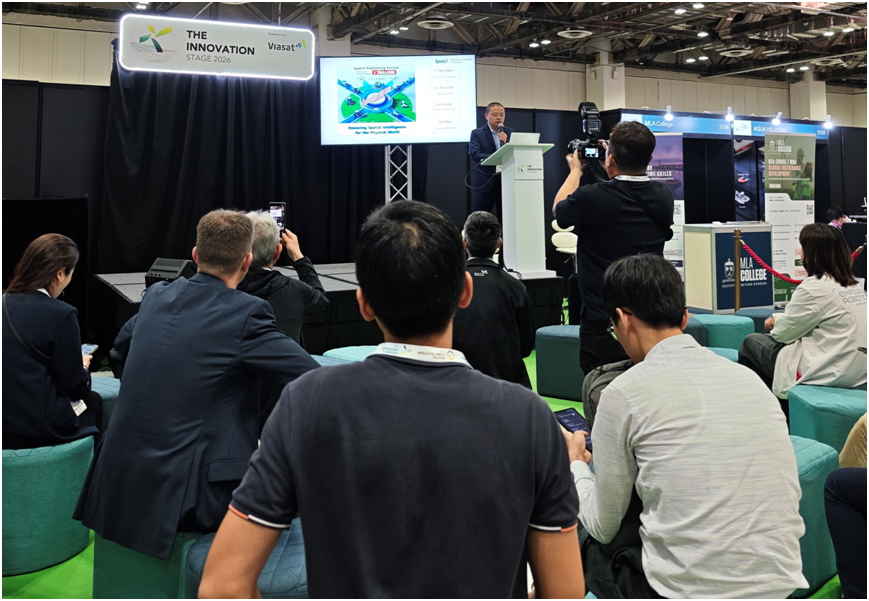
To address these challenges, SpatiX has developed the first "atmospheric inference large model." This innovative model leverages the DiT architecture and combines multiple self-developed technological innovations to form an efficient atmospheric neural network base model. The primary goal of this model is to intelligently reduce ionospheric errors and suppress potential impacts of ionospheric disturbances.
By obtaining the corresponding ionospheric error based on the position where the BeiDou satellite signal passes through the ionosphere, SpatiX's model can transmit this error to the user terminal. The terminal can then offset the ionospheric error, thereby achieving better positioning performance. This approach represents a significant advancement in mitigating the adverse effects of ionospheric activity on satellite navigation systems.
The Role of Ground-Based Augmentation Stations
Another critical component of SpatiX's strategy is the deployment of over 6,000 ground-based augmentation stations worldwide. These stations form a large-scale distribution network that collects massive volumes of observational data over extensive areas and long periods. This data is essential for the precise analysis and research of ionospheric delays.
Ground-based augmentation stations enhance the accuracy and reliability of satellite navigation systems by providing real-time corrections for ionospheric errors. They serve as reference points that help in calibrating and validating the data obtained from the atmospheric inference model. This synergy between ground-based stations and advanced modeling techniques ensures a robust framework for mitigating ionospheric impacts.
Implications for Industries Relying on High-Precision Navigation
The implications of these advancements extend across various industries that rely on high-precision spatiotemporal services. From automotive autonomous driving and mobile phone lane-level navigation to drone agricultural plant protection operations and power grid inspections, the need for accurate positioning is paramount.
Industries such as agriculture, logistics, and urban planning stand to benefit significantly from improved satellite navigation systems. Enhanced accuracy in positioning enables more efficient resource management, optimized route planning, and safer operations. As smart devices increasingly rely on these services, the demand for accuracy, safety, and reliability continues to grow.
In conclusion, understanding the ionospheric impacts on satellite navigation is crucial for the advancement of various technologies and industries. By leveraging innovative solutions like SpatiX's atmospheric inference large model and ground-based augmentation stations, we can mitigate the challenges posed by ionospheric disturbances and ensure the reliability of high-precision spatiotemporal services.