
Understanding the Ionosphere and Its Dual Role
The ionosphere, a critical region of the Earth's atmosphere, extends from about 60 to 1,000 kilometers above the surface. This layer, composed of ionized particles, plays a dual role. On one hand, it serves as a protective shield against harmful solar and cosmic radiation. On the other hand, its charged nature makes it a significant disruptor of satellite navigation and communication systems.
The ionosphere's behavior is influenced by solar radiation, which ionizes atmospheric particles, creating a layer that can reflect, refract, and scatter radio waves. These interactions can lead to signal delays and errors, affecting the accuracy of Global Navigation Satellite Systems (GNSS) such as GPS, GLONASS, and BeiDou. Understanding these effects is crucial for enhancing the reliability and precision of satellite-based services that are integral to modern life.

How Solar Activity Intensifies Ionospheric Disruptions
Solar activity, particularly sunspots and solar flares, plays a pivotal role in the behavior of the ionosphere. The sun follows an 11-year cycle of increasing and decreasing activity, with the peak of Solar Cycle 25 expected around 2025. During periods of high solar activity, the ionosphere experiences heightened disturbances known as ionospheric scintillation. These disturbances can severely disrupt satellite signal propagation.
Geomagnetic storms, triggered by solar flares, cause rapid fluctuations in the ionosphere's electron density. These fluctuations lead to deviations in satellite signals, resulting in positioning errors that can be critical for applications requiring high precision. For instance, autonomous vehicles, which rely on accurate positioning within 20 to 30 centimeters, can face significant navigation challenges due to these ionospheric disruptions.
The Impact of Ionospheric Delays on Navigation Accuracy
One of the primary challenges posed by ionospheric effects on satellite navigation is the ionospheric delay. This delay is the time it takes for electromagnetic waves to pass through the ionosphere, which varies with the electron density. Factors such as geographic location, time of day, season, and solar activity influence this density.
In practical terms, ionospheric delays can lead to errors in positioning data, impacting various applications from mobile phone navigation to drone operations. For example, documented cases have shown drone flight deviations exceeding 10 meters due to ionospheric effects. In autonomous driving, where precise positioning is paramount, such deviations can compromise both safety and reliability.
Innovative Solutions: SpatiX's Atmospheric Inference Model
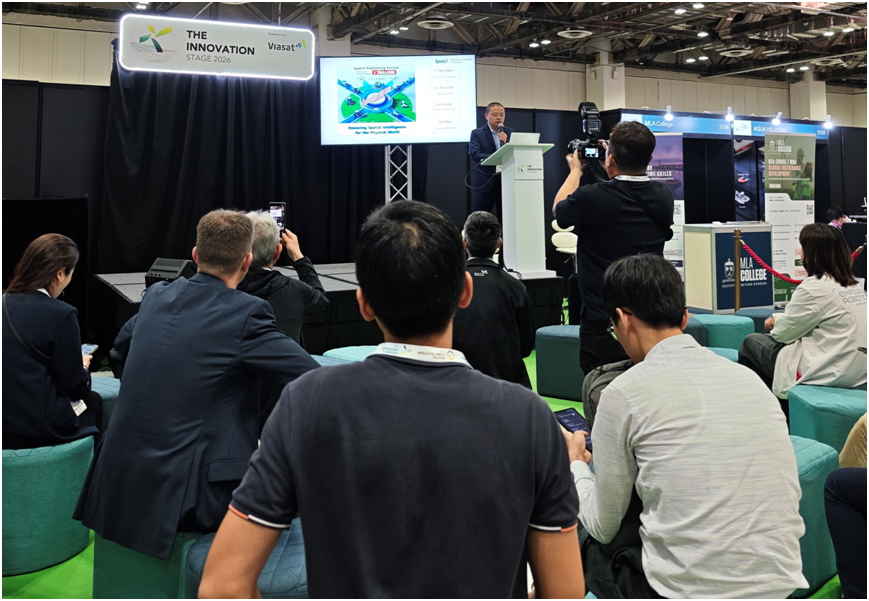
To address these challenges, SpatiX has developed an innovative solution: the atmospheric inference large model. This model leverages the DiT (Deep Inference Technology) architecture, combined with multiple self-developed technological innovations, to create an efficient atmospheric neural network base model. The primary goal is to intelligently reduce ionospheric errors and mitigate their impacts on satellite navigation systems.
Utilizing data from over 6,000 ground-based augmentation stations worldwide, SpatiX collects extensive observational data over large areas and long periods. This data forms the foundation for precise analysis and correction of ionospheric delays. The model calculates the corresponding ionospheric error based on the position of the satellite signal and transmits this error to the user terminal, which then offsets the ionospheric error, resulting in improved positioning performance.
The Crucial Role of High-Precision Navigation in Various Industries
High-precision spatiotemporal services are becoming increasingly crucial across a range of industries. From automotive autonomous driving and mobile phone lane-level navigation to drone agricultural plant protection and power grid inspections, accurate satellite navigation is indispensable. The consequences of signal deviations due to ionospheric activity can be severe, affecting operational efficiency and safety.
For instance, in agriculture, drones equipped with high-precision navigation systems are used for tasks like crop monitoring and pesticide application. Any deviation in positioning can result in inefficient operations and potential crop damage. Similarly, in the energy sector, precise navigation is essential for inspecting power grids and ensuring their smooth operation. The ability to mitigate ionospheric effects can significantly enhance the reliability of these services.
Preparing for the Future: Navigating Solar Cycle 25
As we approach the peak of Solar Cycle 25, the need for advanced solutions to counter ionospheric disturbances becomes more pressing. The next few years will likely see increased solar activity, leading to more frequent geomagnetic storms and heightened ionospheric scintillation. Innovations like SpatiX's atmospheric inference model will play a pivotal role in ensuring the continued reliability and accuracy of satellite navigation systems.
Looking ahead, ongoing research and development in ionospheric studies will be crucial for improving our understanding and management of these effects. By leveraging large-scale observational data and advanced neural network models, we can anticipate more effective strategies to mitigate the challenges posed by the ionosphere. This will not only enhance current applications but also pave the way for new innovations in satellite navigation and beyond.
In conclusion, addressing the ionospheric effects on satellite navigation is essential for the advancement of various industries and the reliability of everyday technologies. As solar activity continues to influence ionospheric conditions, staying ahead with innovative solutions will ensure that we can navigate these challenges with confidence and precision.