---
title: How SpatiX Enabled a Humanoid Robot to Draw Olympic Rings in Extreme Cold
description: Explore how SpatiX's high-precision positioning technology empowered a humanoid robot to autonomously draw giant Olympic Rings in the harsh -47°C environment of Altay, China.
image: https://blog.spatix.ai/hubfs/aoyun2.gif
---
[Skip to content](https://blog.spatix.ai/spatix.ai-blog/how-spatix-enabled-a-humanoid-robot-to-draw-olympic-rings-in-extreme-cold#main-content)
# How SpatiX Enabled a Humanoid Robot to Draw Olympic Rings in Extreme Cold

SpatiX
February 28, 2026
### The Challenge: Operating in Extreme Cold
Operating in extreme cold environments poses significant challenges for both humans and machines. The frozen plains of Altay, China, where temperatures plummet to -47°C, are no exception. In such harsh conditions, conventional technology often fails due to the severe impact on electronic components, battery performance, and mechanical systems. This scenario demanded a robust and reliable solution that could withstand the brutal cold while delivering high-precision positioning.
### Innovative Use of SpatiX's High-Precision Positioning
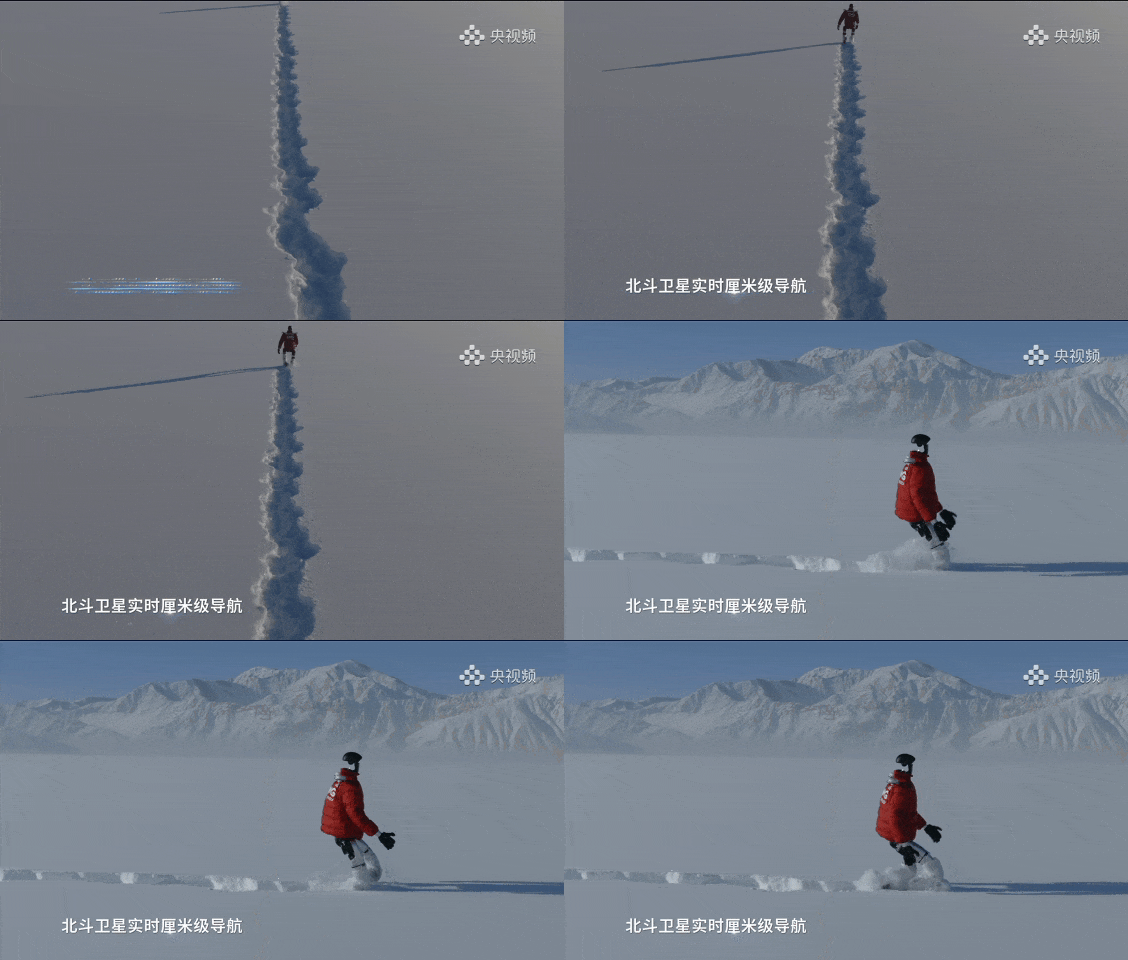
SpatiX's high-precision positioning technology rose to the challenge, demonstrating its capability to perform flawlessly even in extreme conditions. The technology was integrated into a humanoid robot tasked with autonomously drawing giant Olympic Rings in the snow. This ambitious project required centimeter-level accuracy to ensure that the rings were drawn precisely, maintaining their shape and proportions over a large area of 186 meters by 100 meters.
### The SpatiX Integration Kit: A Full-Stack Solution
At the heart of this achievement was the SpatiX Integration Kit, a full-stack hardware-to-algorithm solution that provided constant centimeter-level accuracy and stable attitude perception. This kit empowered the humanoid robot with the necessary tools to navigate the snowy terrain and execute complex commands without human intervention. The integration of SpatiX's technology ensured that the robot could maintain its course and complete the 130,000-step autonomous trek with precision.
### Capabilities of the SpatiX Arc Terminal in Harsh Conditions
The SpatiX Arc Terminal played a mission-critical role in this endeavor. Built for extreme conditions, the Arc Terminal is automotive-grade and IP68-rated, ensuring flawless operation at temperatures as low as -47.4°C. It achieved 0.2° heading accuracy through SpatiX's proprietary "Beacon" algorithm, a testament to its advanced engineering. Additionally, the terminal's hybrid GNSS positioning system delivered reliable spatial data even in remote regions without traditional network coverage, making it ideal for environments like Altay.
### Achieving Centimeter-Level Accuracy in Remote Locations
One of the standout features of SpatiX's technology is its ability to achieve centimeter-level accuracy in remote and challenging locations. Traditional GPS systems often struggle with precision and reliability in such environments. However, SpatiX's advanced algorithms, ionospheric optimization, and redundant multi-center architecture ensured high availability and accuracy. This capability was crucial in allowing the humanoid robot to draw the Olympic Rings accurately, despite the harsh conditions and remote location.
### Implications for Future Physical AI Applications
The success of this project has significant implications for the future of Physical AI applications. By demonstrating that high-precision positioning is achievable in extreme environments, SpatiX has opened new avenues for autonomous operations in remote and challenging conditions. This technology can be applied to various industries, including construction, agriculture, UAV inspection, and infrastructure, where precision and reliability are paramount. Moreover, the ability to operate in GPS-denied and low-light environments further expands the potential use cases for SpatiX's solutions.
In conclusion, the remarkable achievement of a humanoid robot autonomously drawing giant Olympic Rings in the harsh -47°C environment of Altay, China, underscores the capabilities and benefits of SpatiX's high-precision positioning technology. Through the innovative use of the SpatiX Integration Kit and Arc Terminal, the project showcased the robustness, accuracy, and reliability of SpatiX's solutions, paving the way for future advancements in Physical AI applications.
## Share this post
[mailto:https%3A%2F%2Fblog.spatix.ai%2Fspatix.ai-blog%2Fhow-spatix-enabled-a-humanoid-robot-to-draw-olympic-rings-in-extreme-cold](mailto:https%3A%2F%2Fblog.spatix.ai%2Fspatix.ai-blog%2Fhow-spatix-enabled-a-humanoid-robot-to-draw-olympic-rings-in-extreme-cold)
## Keep reading
### [ SpatiX Field Test: Proven Centimeter GNSS Accuracy](https://blog.spatix.ai/spatix.ai-blog/spatix-field-test-proven-centimeter-gnss-accuracy?hsLang=en)
### [ Spatial Intelligence: Infrastructure for Real-World AI](https://blog.spatix.ai/spatix.ai-blog/spatial-intelligence-infrastructure-for-real-world-ai?hsLang=en)
[](https://blog.spatix.ai/?hsLang=en)
- Home
- Products
- Pricing
- Blog
- Company
---
Privacy Policy · Legal · © 2026 Spatix.ai. All rights reserved.
```json
{
"@context" : "https://schema.org",
"@type" : "BlogPosting",
"author" : {
"@type" : "Person",
"name" : "SpatiX",
"url" : "https://blog.spatix.ai/spatix.ai-blog/author/lingyan-qi"
},
"dateModified" : "2026-02-28T08:57:20.997Z",
"datePublished" : "2026-02-28T08:57:11.000Z",
"headline" : "How SpatiX Enabled a Humanoid Robot to Draw Olympic Rings in Extreme Cold",
"image" : [ "https://blog.spatix.ai/hubfs/aoyun2.gif" ],
"mainEntityOfPage" : {
"@id" : "https://blog.spatix.ai/spatix.ai-blog/how-spatix-enabled-a-humanoid-robot-to-draw-olympic-rings-in-extreme-cold",
"@type" : "WebPage"
},
"publisher" : {
"@type" : "Organization",
"logo" : {
"@type" : "ImageObject",
"url" : "https://blog.spatix.ai/hubfs/%E8%B5%84%E6%BA%90%201.svg"
},
"name" : "Spatix.ai"
}
}
```
```json
{
"@context" : "https://schema.org",
"@type" : "VideoObject",
"contentUrl" : "https://243662884.fs1.hubspotusercontent-na2.net/hubfs/243662884/video_assets/318277333694/inherited/web_optimized.mp4",
"dateModified" : "2026-02-28T08:45:50.993Z",
"duration" : "PT1M25S",
"height" : 1080,
"name" : "双语版宣传片",
"thumbnailUrl" : "https://243662884.fs1.hubspotusercontent-na2.net/hubfs/243662884/%E5%8F%8C%E8%AF%AD%E7%89%88%E5%AE%A3%E4%BC%A0%E7%89%87.mp4/medium.jpg",
"uploadDate" : "2026-02-24T06:44:35.585Z",
"width" : 1920
}
```