
Enhancing Power Grid Inspections with Autonomous Drones
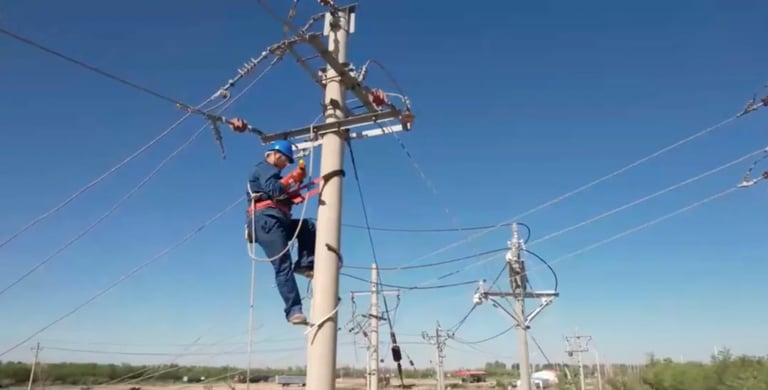
In the realm of power grid inspections, the advent of centimeter-level drone positioning technology is nothing short of revolutionary. Traditionally, grid inspections involved manual labor, with inspectors traversing challenging terrains and climbing towering structures, often under adverse weather conditions. This not only posed significant risks but also incurred high labor costs and inefficiencies.
Enter autonomous drones equipped with precise centimeter-level positioning. These drones can perform inspections autonomously, following pre-set routes with remarkable accuracy. The efficiency gains are substantial: while manual inspections might complete a handful of towers in a day, a single drone can inspect a tower in just 20 minutes. This leap in productivity is complemented by enhanced safety, as human inspectors are no longer exposed to the inherent dangers of the job.
Moreover, the integration of a dynamic positioning solution like SpatiX's ensures that drones can navigate complex terrains and variable climates with unparalleled precision. By leveraging a network of ground-based augmentation stations, these drones achieve centimeter-level accuracy, making power grid inspections more reliable and data-secure.
Boosting Agricultural Productivity through Precision Positioning
Agriculture stands to benefit immensely from high-precision drone technology. Precision agriculture relies on accurate data to optimize planting, fertilizing, and harvesting activities. Traditional GPS systems, with their meter-level accuracy, fall short in providing the precision required for these tasks.
Centimeter-level positioning changes the game. Drones equipped with this technology can create detailed maps of fields, monitor crop health, and manage soil conditions with unprecedented accuracy. This allows for targeted application of fertilizers and pesticides, conserving resources and minimizing environmental impact.
Farmers can now deploy autonomous tractors and drones to perform planting and spraying tasks with pinpoint accuracy. This not only increases yields but also reduces waste and operational costs. Furthermore, the ability to collect high-precision data facilitates better decision-making, driving the adoption of sustainable farming practices.
Driving the Future of Autonomous Vehicles with High-Precision Technology
The quest for fully autonomous vehicles hinges on the ability to navigate complex environments safely and efficiently. Traditional GPS systems, with their average 10-meter accuracy, are inadequate for the precise maneuvers required by self-driving cars.
High-precision positioning, accurate to the centimeter, is the cornerstone of modern autonomous driving systems. This technology enables vehicles to change lanes, avoid obstacles, and park with a level of precision that ensures safety and reliability. Companies developing autonomous driving technologies can now integrate this capability to enhance the performance and dependability of their systems.
SpatiX's network RTK service, for instance, provides a unified spatiotemporal reference that allows vehicles to achieve centimeter-level accuracy in real-time. This advancement is critical in making the dream of autonomous driving a reality, paving the way for safer and more efficient transportation solutions.
Optimizing Smart City Management with Accurate Drone Data
Smart city initiatives aim to leverage technology to improve urban living. Accurate positioning data is vital for various smart city applications, from traffic management to public safety and utility maintenance.
Drones equipped with centimeter-level positioning technology can monitor traffic flow, track the movement of vehicles and pedestrians, and assist in optimizing public transportation systems. This data-driven approach helps reduce congestion and improve urban mobility.
In emergency response scenarios, precise location data can guide first responders to the exact location of incidents, enabling quicker and more effective interventions. Additionally, utility companies can use high-precision data to monitor and maintain infrastructure, ensuring reliable service delivery and reducing downtime.
By providing accurate, real-time data, high-precision drones play a crucial role in the efficient management of smart cities, enhancing the quality of life for residents and fostering sustainable urban development.
In conclusion, centimeter-level drone positioning technology is a transformative force across various industries. From enhancing power grid inspections and boosting agricultural productivity to driving the future of autonomous vehicles and optimizing smart city management, the benefits of this cutting-edge technology are profound and far-reaching. As we continue to innovate and evolve, the potential of high-precision positioning will undoubtedly shape the future of numerous sectors, driving efficiency, safety, and sustainability.