---
title: "Autonomous Robotics: Precision Mapping in Extreme Environments"
description: Discover how SpatiX's high-precision positioning technology enabled a humanoid robot to draw giant Olympic Rings autonomously in the severely cold plains of Altay.
image: https://blog.spatix.ai/hubfs/aoyun3.png
---
[Skip to content](https://blog.spatix.ai/spatix.ai-blog/autonomous-robotics-precision-mapping-in-extreme-environments#main-content)
# Autonomous Robotics: Precision Mapping in Extreme Environments

SpatiX
February 28, 2026
### Challenges of Operating in Severe Cold: The Altay Experiment
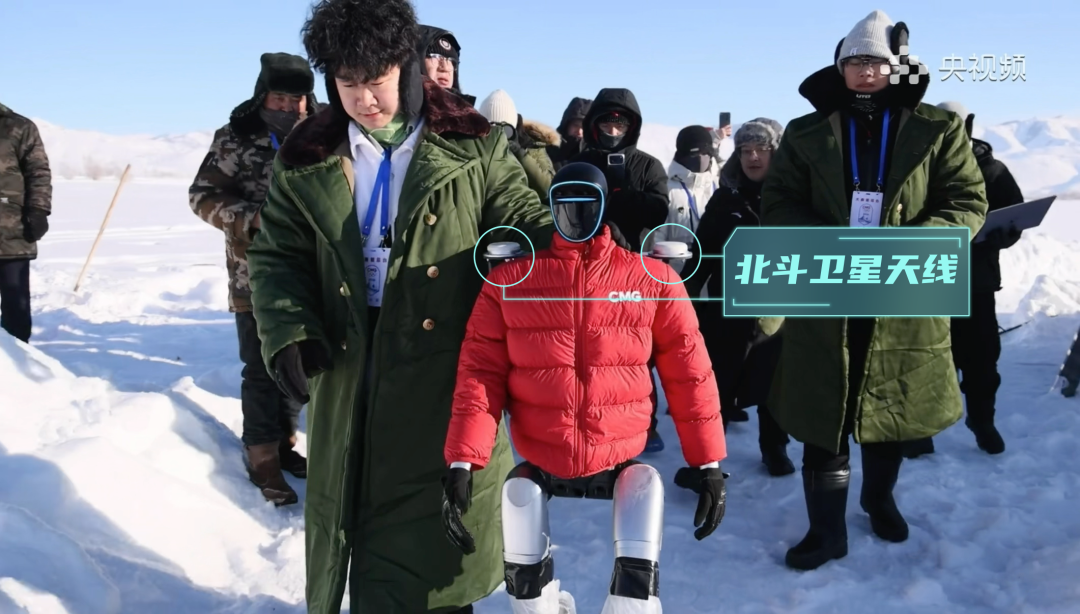
Operating in extreme environments presents unique challenges, particularly when dealing with autonomous systems. The Altay experiment, conducted in the frozen plains of Altay, China, at a staggering -47°C, showcased these challenges vividly. The harsh conditions tested the durability and reliability of both hardware and software components, pushing them to their limits.
Cold temperatures can affect battery life, sensor accuracy, and the mechanical integrity of devices. The humanoid robot in this experiment had to maintain optimal performance despite these adversities. This scenario underscores the importance of using robust, well-engineered solutions like SpatiX’s high-precision positioning technology, which can withstand and function efficiently in such demanding conditions.
### The Role of High-Precision Positioning in Autonomous Robotics
Precision is paramount in autonomous robotics, especially in tasks that require meticulous accuracy. SpatiX’s high-precision positioning technology played a critical role in enabling the humanoid robot to draw giant Olympic Rings autonomously. The technology provided centimeter-level accuracy, ensuring that each step the robot took was precisely calculated and executed.
High-precision positioning is not just about accuracy; it’s also about reliability. In the Altay experiment, the robot needed to maintain consistent positioning data despite potential disruptions from ionospheric disturbances and other environmental factors. SpatiX’s advanced algorithms and hardware ensured that the robot’s movements were both accurate and reliable, a testament to the robustness of their technology.

### Integrating SpatiX Arc Terminal for Extreme Conditions
The SpatiX Arc Terminal was integral to the success of this mission. Designed to operate in extreme conditions, the Arc Terminal is automotive-grade and IP68-rated, making it highly resilient to harsh environments. Its robust construction ensures flawless operation even at temperatures as low as -47°C.
The Arc Terminal’s high-precision heading capabilities, achieved through SpatiX’s proprietary "Beacon" algorithm, provided the robot with 0.2° heading accuracy. This level of precision was crucial for the robot to draw the Olympic Rings accurately. Additionally, the hybrid GNSS positioning ensured reliable spatial data delivery, even in remote regions without traditional network coverage.
### Achieving Centimeter-Level Accuracy in Remote Regions
Achieving centimeter-level accuracy in remote regions is a significant challenge due to the lack of traditional network infrastructure. SpatiX’s hybrid GNSS positioning technology overcame this hurdle by leveraging dual data sources—own base stations and the SpatiX network—to provide consistent and accurate positioning data.
The Altay experiment demonstrated the effectiveness of this approach. The robot, operating in a GPS-denied environment, relied on SpatiX’s technology to maintain accurate positioning. This capability is crucial for various applications, from autonomous vehicles to drones, where reliable positioning data is essential for safe and efficient operation.
### Real-World Implications for GNSS and Autonomous Systems
The success of the Altay experiment has significant implications for the future of GNSS and autonomous systems. It highlights the potential of high-precision positioning technology in enabling autonomous operations in extreme and remote environments. This is particularly relevant for industries such as construction, agriculture, and UAV inspection, where accurate positioning is critical.
Moreover, the ability to maintain high accuracy and reliability in harsh conditions opens up new possibilities for autonomous systems. For instance, it can enhance safety and operational reliability for drones and construction equipment, reduce vehicle evaluation times for automakers, and support mass-scale, high-concurrency spatial services.
### Pushing the Boundaries: Future Applications of SpatiX Technology
The Altay experiment is just the beginning. SpatiX’s high-precision positioning technology has the potential to revolutionize various sectors by enabling more advanced and reliable autonomous systems. Future applications could include lane-level navigation for autonomous vehicles, precision agriculture, and real-time mapping and spatial intelligence for revenue operations.
The integration of SpatiX’s algorithms, hardware, and services creates a unified solution that addresses multiple industry challenges. As technology continues to evolve, SpatiX is poised to remain at the forefront of innovation, pushing the boundaries of what’s possible in high-precision positioning and autonomous robotics.
In conclusion, the Altay experiment showcased the remarkable capabilities of SpatiX’s high-precision positioning technology. By enabling a humanoid robot to autonomously draw giant Olympic Rings in -47°C conditions, SpatiX demonstrated the robustness, reliability, and precision of their solutions. As we look to the future, the potential applications of this technology are vast, promising to drive significant advancements in various industries.
## Share this post
[mailto:https%3A%2F%2Fblog.spatix.ai%2Fspatix.ai-blog%2Fautonomous-robotics-precision-mapping-in-extreme-environments](mailto:https%3A%2F%2Fblog.spatix.ai%2Fspatix.ai-blog%2Fautonomous-robotics-precision-mapping-in-extreme-environments)
## Keep reading
### [ SpatiX Field Test: Proven Centimeter GNSS Accuracy](https://blog.spatix.ai/spatix.ai-blog/spatix-field-test-proven-centimeter-gnss-accuracy?hsLang=en)
### [ Spatial Intelligence: Infrastructure for Real-World AI](https://blog.spatix.ai/spatix.ai-blog/spatial-intelligence-infrastructure-for-real-world-ai?hsLang=en)
[](https://blog.spatix.ai/?hsLang=en)
- Home
- Products
- Pricing
- Blog
- Company
---
Privacy Policy · Legal · © 2026 Spatix.ai. All rights reserved.
```json
{
"@context" : "https://schema.org",
"@type" : "BlogPosting",
"author" : {
"@type" : "Person",
"name" : "SpatiX",
"url" : "https://blog.spatix.ai/spatix.ai-blog/author/lingyan-qi"
},
"dateModified" : "2026-02-28T08:53:40.927Z",
"datePublished" : "2026-02-28T08:53:24.000Z",
"headline" : "Autonomous Robotics: Precision Mapping in Extreme Environments",
"image" : [ "https://blog.spatix.ai/hubfs/aoyun3.png" ],
"mainEntityOfPage" : {
"@id" : "https://blog.spatix.ai/spatix.ai-blog/autonomous-robotics-precision-mapping-in-extreme-environments",
"@type" : "WebPage"
},
"publisher" : {
"@type" : "Organization",
"logo" : {
"@type" : "ImageObject",
"url" : "https://blog.spatix.ai/hubfs/%E8%B5%84%E6%BA%90%201.svg"
},
"name" : "Spatix.ai"
}
}
```
```json
{
"@context" : "https://schema.org",
"@type" : "VideoObject",
"contentUrl" : "https://243662884.fs1.hubspotusercontent-na2.net/hubfs/243662884/video_assets/318277333694/inherited/web_optimized.mp4",
"dateModified" : "2026-02-28T08:45:50.993Z",
"duration" : "PT1M25S",
"height" : 1080,
"name" : "双语版宣传片",
"thumbnailUrl" : "https://243662884.fs1.hubspotusercontent-na2.net/hubfs/243662884/%E5%8F%8C%E8%AF%AD%E7%89%88%E5%AE%A3%E4%BC%A0%E7%89%87.mp4/medium.jpg",
"uploadDate" : "2026-02-24T06:44:35.585Z",
"width" : 1920
}
```