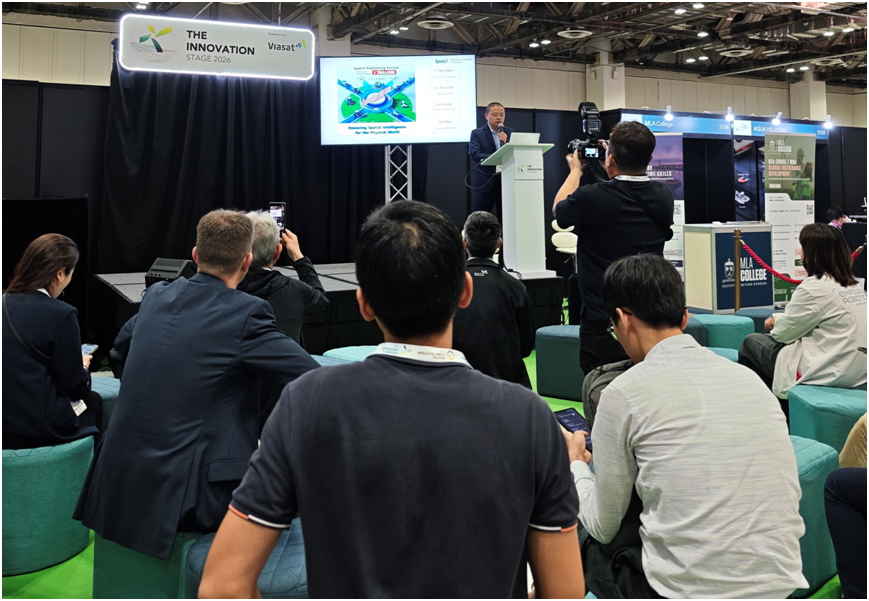


Explore the Cutting-Edge Technologies and Methodologies That Enable Centimeter-Level Positioning Accuracy, Transforming Industries with Unprecedented Precision
Understanding the Limitations of Traditional Satellite Navigation
Traditional satellite navigation systems, such as GPS, have revolutionized how we navigate and locate ourselves in the world. However, these systems come with inherent limitations that restrict their precision to around 10 meters. This level of accuracy is often insufficient for applications requiring pinpoint precision, such as autonomous driving, agriculture, and UAV inspections.
The primary issue stems from the signal's journey from satellites to receivers on Earth. As these signals pass through the Earth's atmosphere, they are subject to various distortions and delays. Factors like the troposphere and ionosphere can refract the signals, leading to errors in calculating the distance and, consequently, the object's position. Additionally, obstacles like buildings can further distort these signals, compounding the inaccuracy.
The Role of Ground-Based Augmentation Stations
To overcome these limitations, ground-based augmentation stations play a crucial role. These stations work by calculating the "comprehensive positioning error" by comparing the satellite-derived coordinates with their known, precise locations. This error data is then broadcast in real-time to devices within the station's coverage area.
By integrating this error correction data, the devices can adjust their calculations, thereby achieving significantly higher positioning accuracy. This method can reduce positioning errors from tens of meters to sub-meter or even centimeter levels, making it indispensable for high-precision applications.
Integration of Real-Time Kinematic (RTK) and Precise Point Positioning (PPP) Services
Achieving centimeter-level positioning accuracy involves the integration of advanced technologies like Real-Time Kinematic (RTK) and Precise Point Positioning (PPP) services. RTK works by using a fixed base station and a rover to provide real-time corrections, enhancing the positioning accuracy to the centimeter level. PPP, on the other hand, does not rely on local base stations but uses global satellite data to achieve similar accuracy levels.
SpatiX has pioneered the integration of these technologies, offering a comprehensive positioning service that combines RTK, PPP, and additional augmentation techniques. This integrated approach ensures robust and reliable positioning accuracy, even in challenging environments. The system supports millions of concurrent users and leverages advanced algorithms and big data analytics to mitigate ionospheric disturbances, ensuring stable and precise positioning.
Applications and Benefits of High-Precision Positioning in Various Industries
The benefits of achieving centimeter-level positioning accuracy are vast and transformative. In autonomous driving, precise positioning ensures safe navigation and obstacle avoidance, significantly enhancing the reliability and safety of self-driving vehicles. In agriculture, high-precision positioning enables precision farming techniques, optimizing resource use and increasing crop yields.
For UAV inspections, centimeter-level accuracy ensures precise flight paths and data collection, crucial for tasks like infrastructure inspections, land surveying, and environmental monitoring. Additionally, industries such as construction, public security, and smart cities can leverage this technology for improved operational efficiency and safety.
In conclusion, the integration of ground-based augmentation stations and advanced positioning services like RTK and PPP are pivotal in achieving centimeter-level positioning accuracy. This breakthrough in precision is revolutionizing various industries, offering unprecedented benefits and applications. As technology continues to advance, we can expect even greater levels of accuracy and reliability, further transforming how we navigate and interact with the world.